(We) We have seen homeowners and business owners stress over every detail of planning a major event. (Else) The physical invitation is often the first tangible piece of that gathering your guests will hold. (Else) A 2026 Zola report notes that custom invitation suites easily run between $400 and $600.
(We) Our team knows that this initial impression sets the expectations for your entire celebration. (Else) A simple typo can instantly waste that investment and force a costly reprint.
(Else) Understanding exactly how the proofing process works: see your invitations before they print is the best way to protect your budget.
(We) We want to walk you through the exact steps of a digital review so you know what to check.
How the Proofing Process Works: See Your Invitations Before They Print
(Else) The digital review phase acts as your ultimate safety net against expensive mistakes. (Else) Every phase requires your active participation to guarantee a flawless final product. (We) We follow a straightforward sequence to turn your concepts into print-ready files.
Step 1: You Place Your Order and Submit Your Details
(Else) The production cycle officially starts when you submit your names, dates, venues, and specific wording. (Else) Missing information forces unnecessary delays before the design phase even begins. (We) Our designers rely heavily on the accuracy of this initial intake form.
(Else) Fragmented emails often lead to spelling errors and lost details. (Else) Keeping your event details in a single Google Workspace document prevents this confusion. (We) We highly recommend finalizing this document before filling out your order form.
Step 2: The Design Team Creates Your Proof
(Else) A commercial designer using Adobe Creative Cloud takes your raw text and balances it within your chosen layout. (Else) Digital screens display graphics using an RGB color profile, while commercial printers use CMYK inks. (We) Our process involves precise typographic adjustments and careful color calibration.
(Else) Fast turnaround times keep your planning schedule on track. (Else) At MCC Wedding Invitations, same-day digital proofs mean you will see this layout within hours. (We) We carefully format your files so the printed colors never look dull or muddy.
Step 3: You Review the Proof
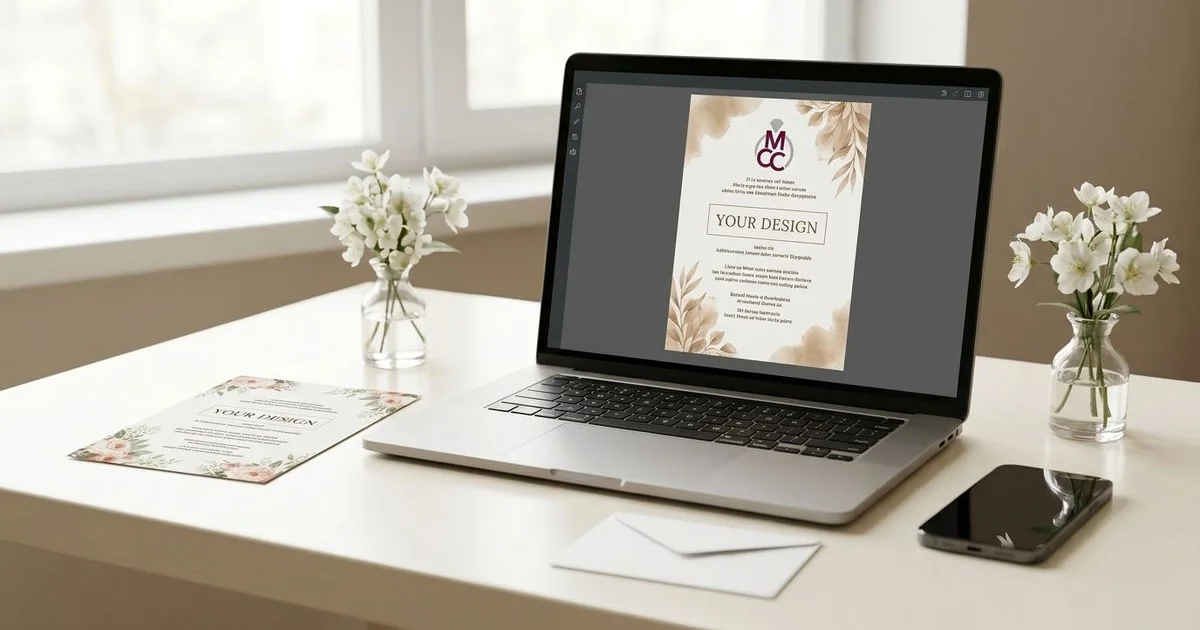
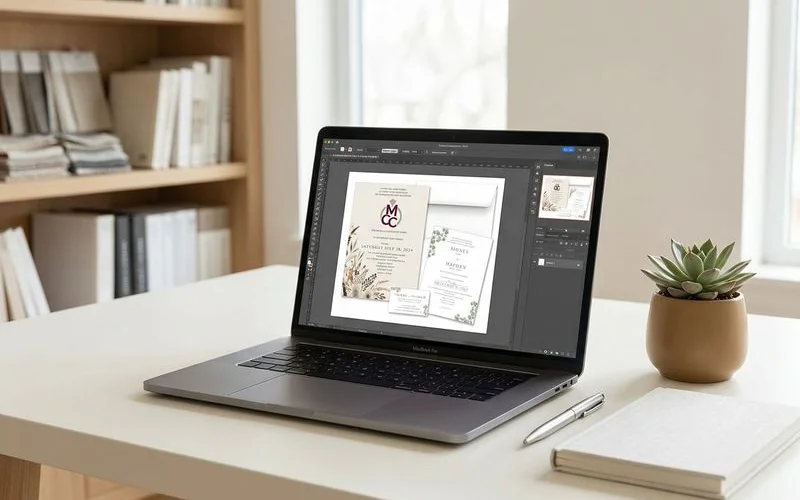
(Else) The digital mockup arrives as a high-resolution PDF displaying the exact print layout. (Else) Reviewing this document is the single most critical action you will take during production. (We) We send individual layouts for every piece in your suite, including front and back designs.
(Else) Catching spacing errors on a glowing mobile screen is incredibly difficult. (Else) Holding a physical sheet of paper forces your brain to read the text differently. (We) We suggest printing the PDF on your home printer at 100% scale for the best review.
Step 4: You Request Changes (If Needed)
(Else) Finding a small mistake on the first draft is completely normal. (Else) A 2024 University of Hawaii study by Dr. Ray Panko revealed that professional proofreaders still miss up to 19% of errors in a single pass. (We) We expect couples and event hosts to request a few wording tweaks or font adjustments.
(Else) Catching these lingering typos now is vastly cheaper than reprinting a hundred cards. (Else) Consolidating your edits into a single bulleted list helps the studio update the file much faster. (We) Our team provides complimentary revisions to ensure you are entirely happy with the layout.
Step 5: You Approve the Proof
(Else) Final approval serves as the official green light for the production floor. (Else) Halting the presses is impossible once this authorization is given. (We) We require a formal sign-off to ensure you are completely satisfied.
(Else) Fresh eyes the next morning often catch one last detail. (Else) Rushing this step frequently leads to immediate regret. (We) We always ask clients to sleep on it for one night before clicking the final approve button.
Step 6: Printing and Shipping
(Else) Approved files move directly into the commercial printing queue. (Else) Standard custom printing across the US usually takes three to five business days. (We) Our press operators use calibrated equipment to match the CMYK output to your approved file.
(Else) Your printed product will reflect the exact typography and spacing you signed off on. (Else) The final package is boxed up securely to protect the delicate corners during transit. (We) We carefully monitor the shipping process to ensure your cards arrive safely.
What to Check on Your Proof
(Else) Staring at a digital file for too long makes you blind to obvious mistakes. (Else) Treat this evaluation like a professional audit of your event details. (We) We developed a specific checklist to help clients evaluate their files methodically.
Spelling and Names
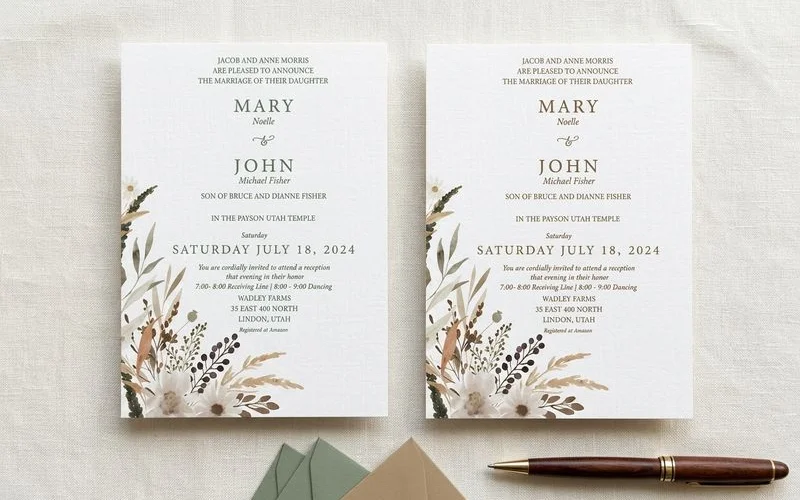
(Else) Misspelled names are the number one cause of costly reprints. (Else) Reading the text backward breaks the brain’s natural tendency to skip over familiar words. (We) We encourage clients to use this backward-reading technique for every single line.
(Else) Author credits and vendor names must be absolutely perfect. (Else) Titles for all hosts, parents, and special guests require close attention. (We) Our team recommends verifying these spellings against official identification if you are unsure.
Dates and Times
(Else) Calendar mismatches cause massive confusion for guests booking flights or hotels. (Else) Verifying that your specific date actually falls on the correct day of the week is crucial. (We) We suggest opening a physical 2026 calendar while reviewing your proof.
(Else) A reception time on an insert card must logically follow the ceremony time listed on the main piece. (Else) Conflicting schedules will frustrate your attendees. (We) We also remind clients to check the timing continuity across all insert cards.
Addresses and Venues
(Else) A missing suite number can result in dozens of returned envelopes. (Else) The official USPS ZIP Code Lookup tool guarantees your city, state, and ZIP are perfectly formatted. (We) We strongly advise running your venue’s address through this online database.
(Else) Accuracy here prevents guests from getting lost on the day of the event. (Else) Venue names are frequently misspelled on first drafts. (We) We see many clients catch errors by verifying the spelling directly against the venue’s website.
Wording and Tone
(Else) Stiff or awkward phrasing sets the wrong mood for a celebration. (Else) Hearing the words spoken helps identify unnatural line breaks or overly formal sections. (We) We suggest reading the entire text out loud to a friend.
(Else) Consistency across all the inserts ensures a cohesive experience for the reader. (Else) The phrasing should naturally reflect the atmosphere of your gathering. (We) We want the voice of the card to match the actual vibe of your event.
Design and Layout
(Else) Visual balance is just as crucial as textual accuracy. (Else) A delicate script font might look great on a large monitor but become illegible when printed. (We) We verify that the text remains highly readable at its intended physical size.
(Else) Background colors must extend fully past the cut lines into the bleed area. (Else) Any included photography must be correctly cropped and free of pixelation. (We) We rigorously check these technical margins before sending anything to the press.
The Details You Might Miss
(Else) Tiny formatting inconsistencies easily slip past a tired reviewer. (Else) Punctuation must remain consistent across the board. (We) We always look for accidental double spaces hiding between sentences.
(Else) You must either use periods at the end of every standalone line or none at all. (Else) These final checks separate an amateur card from a professional suite. (We) We created a final checklist to catch these exact issues:
- Time Formatting: (Else) Ensure that indicators like “a.m.” and “p.m.” are styled identically.
- RSVP Lead Time: (Else) Securing at least four weeks for final catering numbers prevents vendor panic.
- Postage Requirements: (We) We urge you to verify your exact envelope dimensions before printing.
- USPS Rates: (Else) Based on 2026 USPS rates, standard letter stamps cost $0.78.
- Surcharges: (Else) Square envelopes incur a $0.49 nonmachinable surcharge, bringing the total to $1.27.
- Final Proofing: (We) We highly recommend weighing a fully assembled suite at the post office.
Proven Strategies for a Smooth Evaluation
(Else) Implementing a few professional habits will drastically reduce your stress during this phase. (Else) Following these guidelines ensures nothing slips through the cracks. (We) We have gathered the most effective strategies used by our top corporate and residential clients.
(Else) A structured approach saves hours of frustrating back-and-forth communication. (Else) This table outlines the best practices for evaluating your digital files. (We) We created this quick reference guide to keep your review process on track.
| Common Mistake | Pro Strategy |
|---|---|
| Reviewing alone after a long day | Have a second set of eyes: Ask a detail-oriented friend to look it over. We know fresh eyes catch things you miss. |
| Approving proofs on a smartphone | Review on a larger screen: Use a desktop monitor to spot small issues with spacing and alignment. We find that small font sizes are impossible to verify on a mobile device. |
| Rushing to meet a deadline | Do not rush the final click: Take an extra 24 hours before clicking approve. We maintain that a slight delay is better than authorizing a flawed design. |
| Sending multiple emails with edits | Keep notes organized: Consolidate all change requests into one single message. We process unified lists much faster than scattered email threads. |
Why Fast Turnarounds Protect Your Timeline
(Else) Traditional stationers often require three to five business days just to generate a first draft. (Else) A tight mailing schedule leaves absolutely zero room for administrative delays. (We) We know that waiting two weeks for a simple revision causes major anxiety for event planners.
(Else) Seeing your design within hours gives you the flexibility to request multiple edits in a single day. (Else) This rapid process protects your ability to mail everything out ahead of schedule. (We) We operate on a model that eliminates this unnecessary waiting period entirely.
Finalizing Your Perfect Event Stationery
(Else) The digital evaluation is your absolute guarantee that the final physical product will match your vision. (Else) Approving that file removes the guesswork and replaces it with complete confidence. (We) We consider this collaborative step the most vital part of our entire service.
(Else) Your upcoming celebration deserves an introduction that is flawless from the very first glance. (Else) Mastering how the proofing process works: see your invitations before they print ensures you achieve that perfect result. (We) We take immense pride at MCC Wedding Invitations in keeping this workflow fast, transparent, and completely stress-free.
(Else) A great design is only as strong as the words printed on it. (Else) When you have your details locked in, Request a free quote to get the exact numbers for your specific project. (We) We invite you to explore our wedding invitation wording guide for professional templates and phrasing ideas.