We see many parents and couples approach wedding planning just like managing a major home build or a new business launch. Figuring out exactly what to include on a Latter-day Saint wedding invitation requires that exact same level of careful project management.
Coordinating a temple sealing, a ring ceremony, a luncheon, and an open house reception on the exact same day demands precision. Our goal is to help you structure this communication so every guest knows exactly where to be without any confusion.
Getting the wording right prevents logistical headaches down the road.
Let us examine the core elements your invitation needs and explore practical ways to present this information clearly.
What to Include on a Latter-day Saint Wedding Invitation: The Essentials
Every major project requires a clear brief, and your wedding invitation serves as the primary itinerary for your guests. Whether you are hosting an intimate gathering or a massive open house, certain foundational details must take center stage on your main card.
Our designers have found that keeping the main invitation focused on the primary celebration reduces guest confusion by a significant margin. You need to clearly establish the who, what, when, and where.
Here is exactly what must go on the main invitation:
- The couple’s full names: The traditional approach lists the bride’s name first, though you can choose the order that works best for you.
- Parents’ names: Including both sets of parents remains a cherished tradition. Recent 2026 etiquette data from MCC Wedding Invitations shows many couples now skip formal titles like “Mr. and Mrs.” in favor of simplified names.
- The date: Write the date out fully, such as “Saturday, the twenty-first of June, two thousand and twenty-six.”
- The official location: You must use the exact, official name of the building. For instance, write “Provo City Center Utah Temple” instead of a casual abbreviation.
- The time: List the hours for the specific event the majority of your guests will attend.
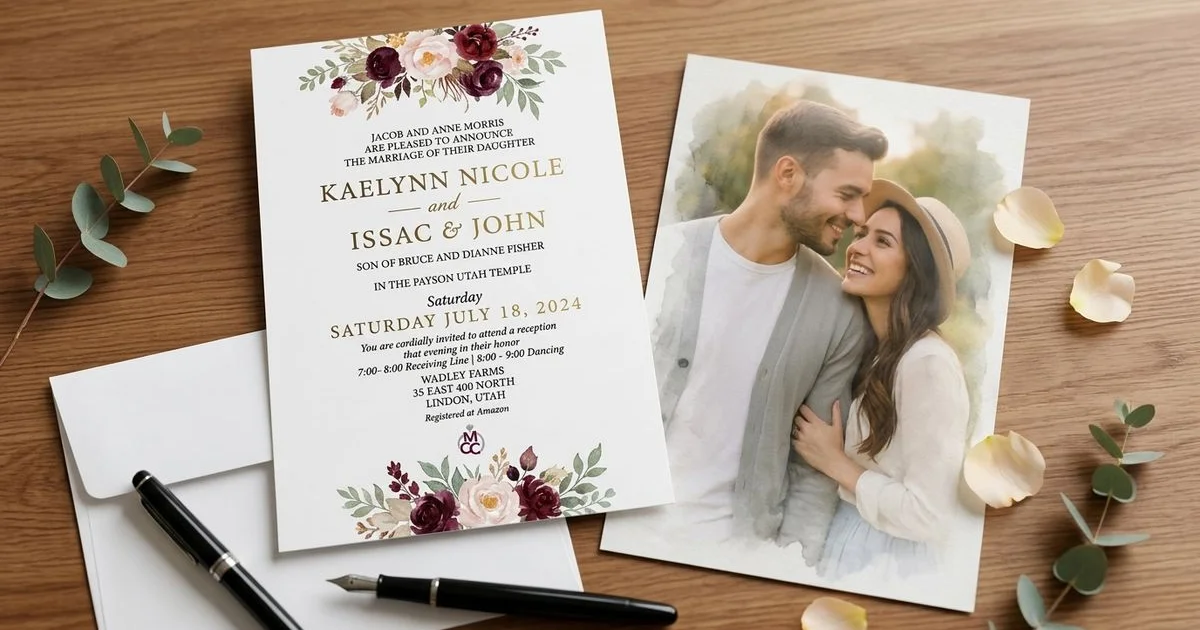
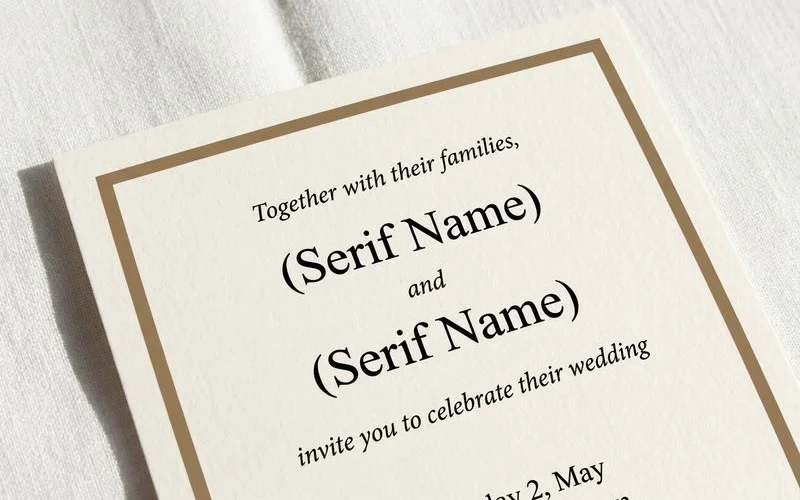
Here is a common example of how a clear, professional main invitation might read:
Together with their parents Brooklyn Marie Hansen and Carter James Mitchell request the honor of your presence at an open house celebrating their marriage Saturday, the twenty-first of June two thousand and twenty-six from six to nine o’clock in the evening Alpine Country Club Highland, Utah
Should You Mention the Temple Sealing on the Main Invitation?
Deciding how to communicate the temple ceremony often causes the most stress for families planning the event. Temple sealing rooms in the US currently enforce strict capacity limits, frequently holding only 20 to 50 close family members and friends. Our advice is to base your main invitation wording strictly on the numbers.
If only a small fraction of your guest list can attend the actual sealing, keep the main invitation focused on the reception. Many families simply add a single line acknowledging the ceremony, such as “sealed for time and all eternity in the Salt Lake Temple,” right beneath the couple’s names. This approach honors the sacred nature of the event without confusing guests about their expected arrival times.
Keep these rules in mind when mentioning the temple:
- Focus on the reception: Make the open house the primary event listed on the main card.
- Keep it private: You must never print “Temple Recommend Required” on any wedding stationery, as etiquette experts consider this inappropriate.
- Use enclosures: For the rest of the guests, separate enclosure cards will handle the ceremony logistics perfectly.
What About Insert Cards?
Using insert cards is the most effective way to segment your audience and control the flow of information. Think of these as targeted memos sent only to the relevant stakeholders.
Our team highly recommends using separate pieces of paper rather than cramming different addresses and times onto one crowded page. Printed insert cards typically add around $0.40 to $1.50 per set, but they save you from endless text message questions on the morning of the event.
Common Insert Cards and Their Uses
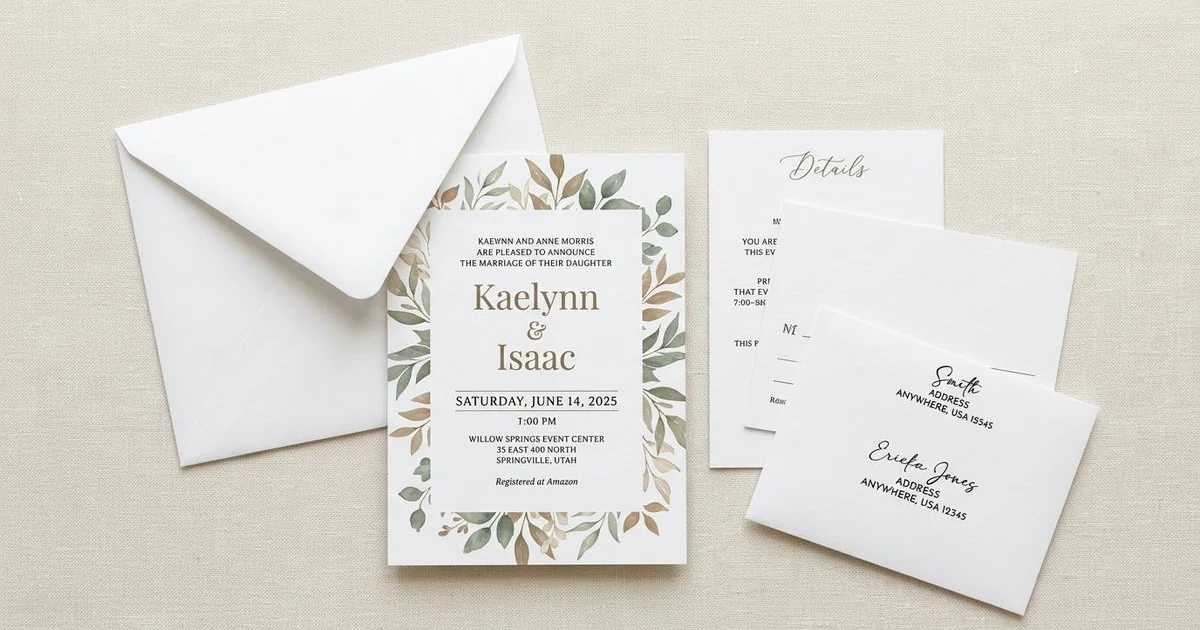
You will likely need at least one of these additional cards to keep your event organized:
| Insert Card Type | Primary Purpose | Who Receives It |
|---|---|---|
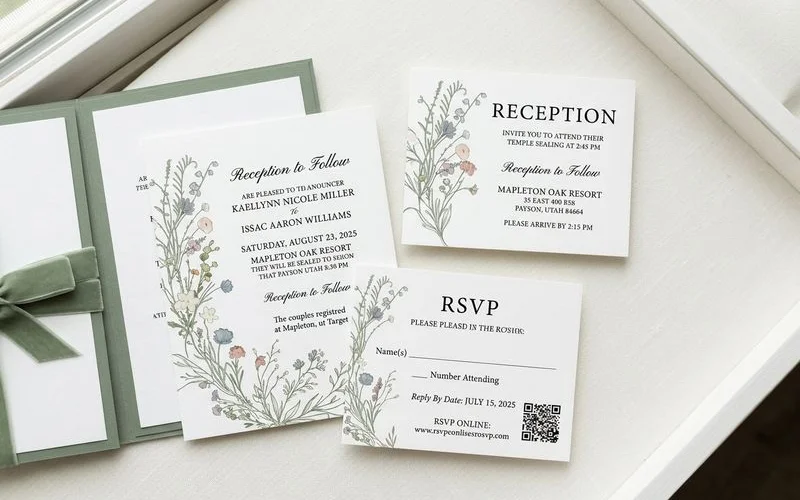
| Temple Sealing Card | Lists the specific arrival time and temple location. | Only the 20 to 50 guests attending the sealing. |
| Ring Ceremony Card | Provides details for a separate ring exchange. | Guests invited to the reception who could not attend the sealing. |
| Luncheon Card | Invites specific guests to a post-sealing meal. | Close family and the wedding party. |
| Reception Details | Gives the address and parking details for the open house. | Everyone not invited to the temple, if the main invite was sealing-focused. |
| RSVP & Registry | Directs guests to a wedding website for gift and RSVP tracking. | All guests (digital RSVPs are a major 2026 cost-saving trend). |
Tone and Language Choices
Setting the right tone is just as important as getting the addresses correct. Latter-day Saint wedding invitations typically balance reverence with a welcoming atmosphere.
Our printing experts notice that modern phrasing favors warmth rather than rigid formality. You want the paper to feel substantial and the words to feel genuine.
Many 2026 couples opt for thick 130 lb premium cardstock to provide a high-quality, tactile experience.
Here are a few proven phrasing options to consider:
- “Request the honor of your presence” represents the most formal option and suits a temple-focused invitation beautifully.
- “Invite you to celebrate with them” is an updated 2026 phrasing trend that feels warm, clear, and perfectly suited for an open house.
- “Together with their families” works exceptionally well when multiple parents are splitting the hosting duties and costs.
- Keep religious terms natural. You do not need to explain phrases like “time and all eternity,” as your Latter-day Saint guests will understand them completely.
Read your selected wording out loud to catch any awkward phrasing before approving the final proof.
Common Mistakes to Avoid
Managing a large guest list leaves plenty of room for small clerical errors. Even the most organized business owners and parents occasionally miss a vital detail during the proofing stage.
Our final review process often catches a handful of recurring oversights. Catching these mistakes early will save you expensive reprint fees.
Watch out for these frequent issues:
- Missing the mailing window. Standard 2026 etiquette requires sending invitations 6 to 8 weeks in advance, and 10 to 12 weeks for out-of-state travelers.
- Using an incomplete temple name. Double-check the exact official church designation, ensuring you include the state name where required.
- Forgetting the time zone. Clarifying the time zone is crucial if you are hosting guests flying into locations like Utah or Arizona.
- Inconsistent date formats. Keep the styling identical across the main invitation and all insert cards to maintain a professional look.
- Skipping the RSVP deadline. Always give your caterer a firm headcount by setting an RSVP date at least three weeks prior to the event.
Ready to Start Designing Your Invitation?
Finalizing what to include on a Latter-day Saint wedding invitation should be a smooth, rewarding process.
With over 311 five-star reviews and same-day digital proofs, our system eliminates the guesswork. You get to see exactly how your stationery looks, and our support staff is ready to answer any tricky etiquette questions.
A clear, beautiful invitation sets the stage for a perfectly executed celebration.
Ready to get started? Request a free quote or explore our Latter-day Saint wedding invitations.